

- 27 October 2026
You’ve probably stood in front of the mirror more times than you’d like to admit, tilting your face in the light, wondering why that patch near your cheek just won’t fade. Maybe it’s from an old breakout. Maybe it showed up after a summer with too little sunscreen. Either way, you’ve tried the creams, the serums, the home remedies your aunt swore by. And the patch is still there.
This is usually the point where people start searching for laser treatment for pigmentation in Delhi. But lasers get a lot of hype, some deserved and some not. So let’s talk honestly about what they do, what they don’t, and whether they’re worth it for your skin.
What Pigmentation Actually Is
Pigmentation isn’t one single thing. It’s an umbrella term for a handful of different skin concerns, and that distinction matters more than most people realise.
- Sun spots: These spots form from years of UV exposure
- Melasma: These are larger, often symmetrical patches, frequently linked to hormones
- Post-inflammatory hyperpigmentation: This kind of pigmentation usually follows acne, cuts, or any skin injury
- Freckles: These are usually genetic
- Under-eye darkness: It is caused by thin under-eye skin, blood vessel visibility, or pigment buildup rather than sun damage alone
Each of these responds differently to treatment. A laser that works beautifully on sun spots can s ometimes worsen melasma if used incorrectly. That’s why figuring out exactly what you’re dealing with has to come before any laser touches your skin.
How Laser Treatment Actually Works
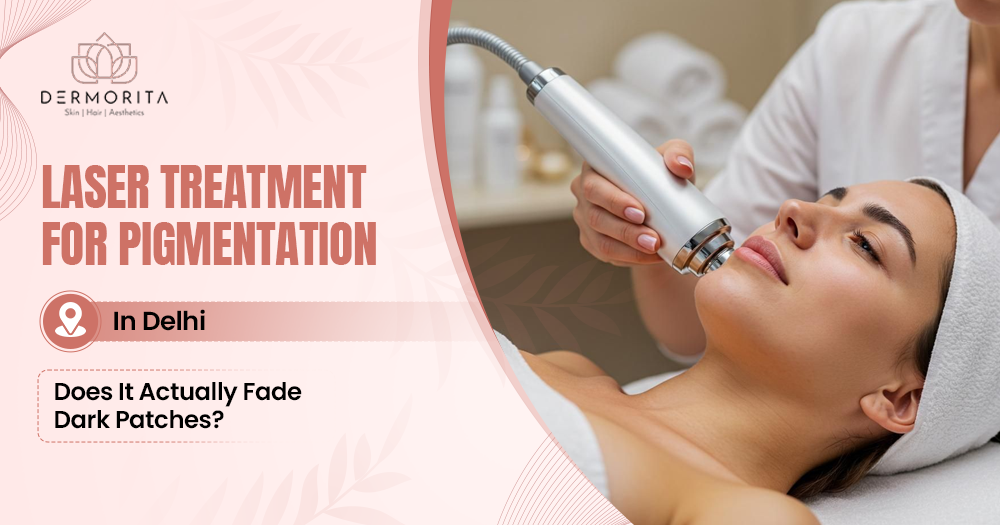
Lasers target pigment using focused light energy. The light is absorbed by melanin, breaking it into smaller particles that your body naturally clears away over the following weeks. Some lasers also stimulate collagen, which helps with overall texture, not just colour.
There isn’t one single “pigmentation laser.” Dermatologists choose from a range of devices depending on your skin type and the kind of pigmentation involved:
- Q-switched lasers – common for sun spots and some forms of hyperpigmentation
- Picosecond lasers – work faster and with less downtime
- Fractional lasers – combine toning with mild resurfacing
For melasma, doctors are often more cautious, since aggressive lasers can trigger rebound pigmentation in sensitive or darker skin tones.
This is the part people searching for skin whitening laser treatment in Delhi often misunderstand. The goal isn’t to lighten your overall skin tone. A good dermatologist is not trying to change your natural complexion. The aim is to even out patches so your skin tone looks consistent, not artificially pale.
Does It Actually Fade Dark Patches? Does It Actually Fade Dark Patches?
Yes, in most cases, though “fade” is the more accurate word than “erase.”
- Sun spots and post-acne marks typically respond well, often showing visible lightening after two to four sessions
- Melasma can improve significantly, but it’s also prone to returning, especially with sun exposure or hormonal shifts, so maintenance matters as much as the initial treatment
Results depend heavily on three things: your skin type, how long you’ve had the pigmentation, and how closely you protect your skin afterward. Skipping sunscreen after a session is one of the fastest ways to undo progress.
What About Under-Eye Pigmentation?
Under-eye treatment in Delhi is one of the most searched add-ons to pigmentation queries in Delhi, and for a reason. Dark circles are stubborn, and they age the face in a way that frustrates people more than almost any other skin problem.
If the darkness is pigment, and not just shadows or volume loss, laser treatment can be helpful. A dermatologist checks which factor is actually driving the darkness first. If it’s thinning skin or visible blood vessels rather than pigment, a laser isn’t the fix. Something else works better, often paired with other treatments.
What a Session Actually Feels Like
- Mild discomfort, often described as a light snapping sensation
- Numbing cream applied beforehand for comfort
- Skin may look red or feel warm afterward, similar to mild sunburn, for a day or two
- Tiny dark specks may appear on treated spots and flake off naturally within a week
- Downtime is usually short
Sun protection afterward isn’t optional. It’s the single biggest factor in whether your results last.
Choosing the Right Clinic
Not all lasers can be used on all skin tones, and Indian skin needs special care. The wrong settings may result in more pigmentation, instead of decreasing it.
Find a dermatologist who:
- Properly examines your skin before recommending anything
- Describes what kind of pigmentation you have
- Suggests a laser that is specific to your particular diagnosis, not a one-size-fits-all package
Dr. Sarita Sanke at DermoRita, Greater Kailash-1, South Delhi, considers each case individually and then recommends a treatment plan, which is much more important than the brand name of the laser itself.
Ready for an honest assessment of your pigmentation? Book a consultation with DermoRita in Lajpat Nagar, South Delhi, and get a treatment plan built around your actual skin, not a generic package.
Frequently Asked Questions
1. How many sessions are usually needed?
Most people need three to six sessions, spaced three to four weeks apart, depending on the type and depth of pigmentation.
2. Is laser treatment painful?
It causes mild discomfort rather than real pain. Numbing cream keeps most sessions comfortable.
3. Can laser treatment worsen pigmentation?
It can, if the wrong type of laser or settings are used on sensitive skin or melasma. That’s why diagnosis matters before treatment starts.
4. How long do results last?
Sun spots often stay faded long-term with good sun protection. Melasma can return, especially with sun exposure or hormonal changes.
5. Is laser treatment safe for Indian skin tones?
Yes, when the dermatologist chooses the right laser type and settings for darker skin. However, this is not a safe area for experimentation, so experience matters
Clinic Timings
Consultation timings 11:00 - 8:00 PM ( Monday to Saturday) Sunday- 12:00 - 5:00 PM Wednesday closed (By prior appointment only) Video Consultation Monday to Saturday Available
Email: sankesarita@gmail.com